
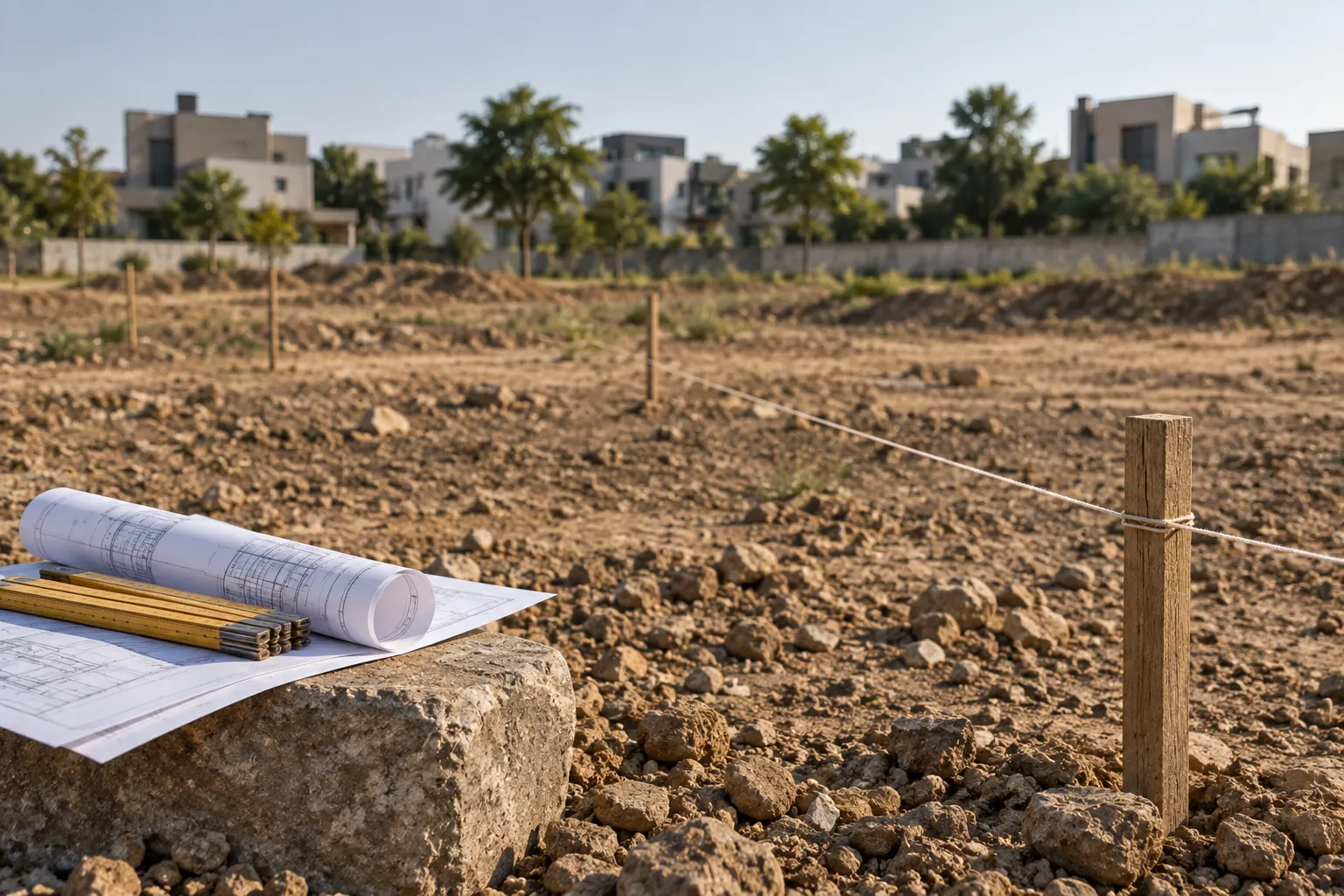
Benefits of Hiring an Architect before Buying a Plot
What an architect catches on a site visit that a broker will not mention.
Buying a plot is one of the biggest investments in a person’s life. Most people focus on the location, price, and legal paperwork while selecting land, but often ignore one critical factor — whether the plot is actually suitable for the kind of home or building they dream of creating. This is where hiring an architect before purchasing a plot becomes extremely valuable.
An architect does much more than design beautiful buildings. They help analyze the potential of the land, understand future possibilities, avoid costly mistakes, and ensure that your investment is practical as well as profitable. Whether you are planning to build a luxury villa, a family home, a commercial property, or an investment project, consulting an architect before finalizing the plot can save both money and stress in the long run.
In rapidly growing cities like Lucknow, where real estate prices are increasing and urban planning is evolving quickly, choosing the right plot has become more important than ever. A wrong plot can limit design options, increase construction costs, create legal complications, or affect resale value. On the other hand, the right plot can improve natural lighting, ventilation, aesthetics, functionality, and future appreciation.
1. Understanding the Plot’s True Potential
At first glance, many plots may appear attractive because of their size or location. However, not every plot is suitable for every type of construction. An architect can evaluate the land and determine its actual potential — shape, road access, slope, drainage, and surrounding construction restrictions — so buyers don’t end up purchasing land that limits their vision.
2. Better Space Planning from Day One
One of the biggest advantages of involving an architect early is efficient space planning: entrance positioning, garden and landscape areas, parking layout, sunlight direction, privacy between rooms, and open-space utilization. Sometimes a smaller but well-planned plot performs far better than a larger but poorly positioned one.
3. Evaluating Sunlight and Ventilation
An architect studies the orientation of the plot and how sunlight moves through the day — which side should face bedrooms, where windows and courtyards should sit, and which direction suits living spaces best. For Indian weather conditions, especially in cities like Lucknow where summers can be intense, proper orientation significantly reduces heat gain and electricity costs.
4. Avoiding Costly Construction Mistakes
Many buyers purchase plots based only on pricing or location and later discover hidden challenges — extra foundation work, soil strengthening, drainage correction, retaining walls, or additional waterproofing. Architects identify such risks beforehand, and a small architectural consultation before buying land can save lakhs of rupees later.
5. Checking Building Regulations and Restrictions
Different areas carry different building bylaws, development controls, and construction restrictions. An architect can verify Floor Area Ratio, height restrictions, setback requirements, zoning, road-widening impacts, and green-area requirements — especially important in fast-developing areas where infrastructure projects can affect land usability.
6. Better Return on Investment
A professionally selected plot often delivers higher long-term value. Road visibility, corner-plot advantages, ventilation quality, and scope for modern design all influence resale demand — guidance that is especially valuable for investors.
7. Designing According to Lifestyle Needs
Every family has different requirements — open spaces and gardens for some, luxury interiors or home offices for others. An architect evaluates whether a plot can comfortably support a duplex, a grand elevation, a courtyard, or the privacy a family expects from its neighbours.
8. Understanding Soil and Site Conditions
Soil quality plays a crucial role in construction safety and cost. Architects often coordinate with engineers on soil testing to identify bearing capacity, water retention, flood risk, and drainage conditions before they become expensive surprises mid-construction.
9. Creating Better Aesthetics and Elevation
Frontage width, road alignment, corner visibility, and height proportions all shape what’s architecturally possible. A well-selected plot lets an architect create an elevation that actually looks the way the client imagined it.
10. Planning for Future Expansion
Families and businesses evolve. Architects help buyers choose plots that leave room for additional floors, extra parking, a rentable floor, or a future commercial conversion — future-ready planning that protects both convenience and property value.
11. Sustainable and Energy-Efficient Planning
An architect can identify plots suited to rainwater harvesting, solar panels, natural cooling, and cross ventilation — sustainable choices that are gaining real importance as eco-friendly homes become more popular across India.
12. Avoiding Emotional Buying Decisions
Many people buy plots emotionally after seeing an attractive location or a discounted offer. Architects bring a practical, fact-based evaluation — long-term usability, construction feasibility, cost implications, and future market value — that leads to smarter decisions.
13. Better Coordination with Construction Teams Later
When an architect is involved from the beginning, they already understand the site’s dimensions, environmental conditions, and regulatory requirements — which streamlines design development, structural planning, and material selection once construction begins.
14. Saving Time During the Design Process
Many homeowners spend months redesigning plans because the plot they bought creates limitations. When an architect evaluates the plot before purchase, orientation, floor planning, and circulation are already understood — reducing unnecessary redesign work.
15. Professional Guidance in Competitive Real Estate Markets
In fast-growing cities like Lucknow, not every attractive property is a smart investment. An architect’s read on upcoming infrastructure, neighbourhood suitability, and long-term development potential helps buyers move with confidence in a competitive market.
Conclusion
Hiring an architect before buying a plot is not an unnecessary expense — it is a smart investment. The right plot is the foundation of a successful project, and involving an architect at the earliest stage ensures your vision aligns with the land you choose, before money is spent finding out the hard way.