Mahal Jewels
Gomti Nagar, Lucknow
A formal arched frontage and refined retail interiors give this jewellery showroom a consistent architectural identity from street to consultation spaces.
Explore commercial architecturePK Verma · Architect & Urban Planner · Lucknow
PK Verma founded ADC India in Lucknow and leads its architectural work across private residences, commercial properties, hotels and institutional buildings.
His judgment connects decisions about the site, spatial planning and architectural character with the work needed to carry them into construction.
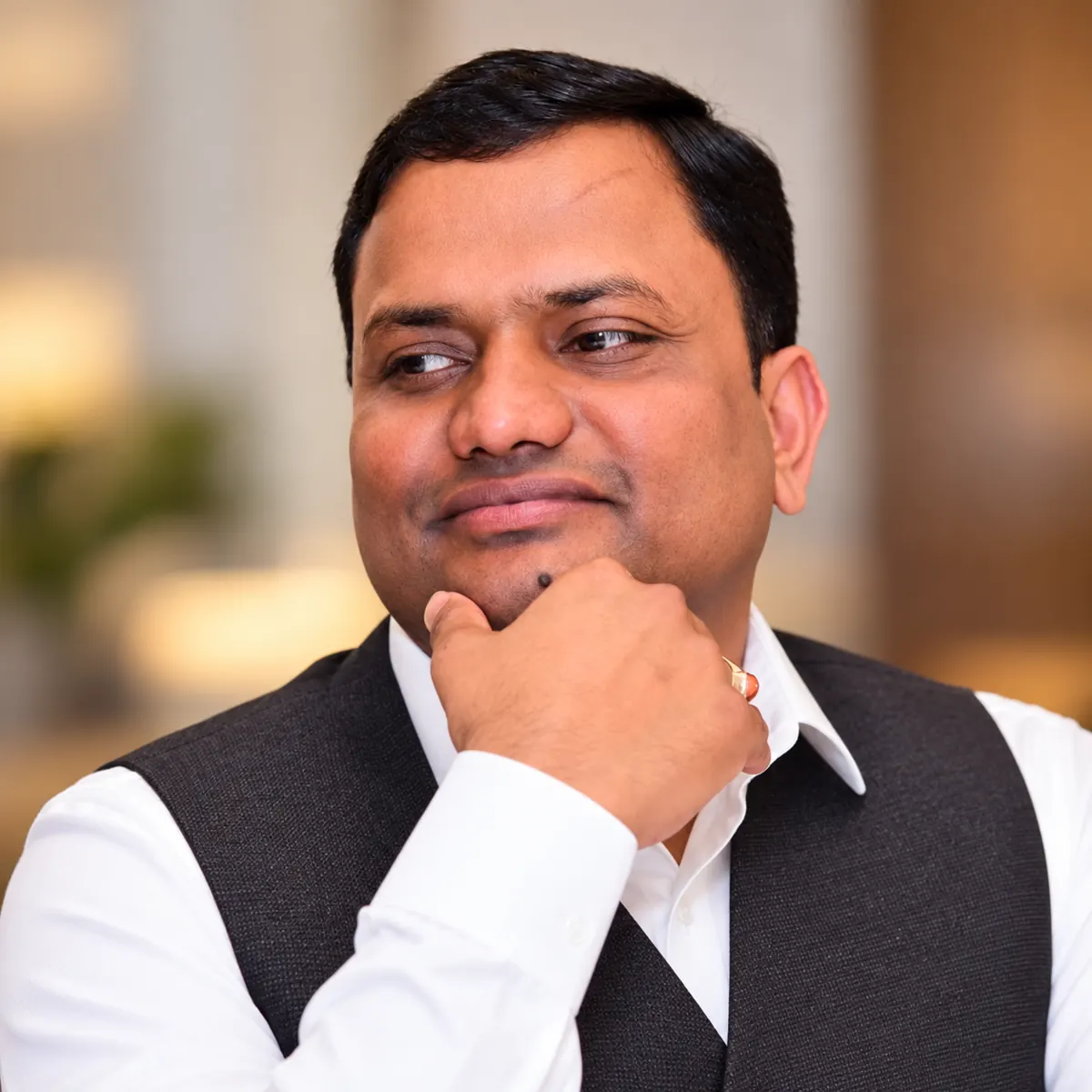
PK Verma began his architectural career in 2003. In 2005, he established Arch Design & Construction in Lucknow, developing a practice in which architecture leads the broader design and delivery process.
He began his professional work at Cosmic Designs Pvt Ltd, working with architect D. S. Bhui.
He established the Lucknow-based practice that operates publicly as ADC India, bringing his own architectural direction to the work.
His role connects design decisions with the multidisciplinary work needed to take projects through interiors, technical coordination and construction.
The architect’s most valuable decisions often happen before the design is fixed. PK Verma evaluates what a site allows, which priorities deserve space and how a building’s identity can hold up through execution.
Access, orientation, neighbouring buildings and the available plot influence massing, privacy and where the building should make its strongest impression.
A brief rarely comes with every trade-off resolved. Space, functionality, architectural character, the client’s investment priorities and any Vaastu preferences they want considered must be weighed together.
A hotel, hospital, school and private home call for different spatial relationships. Entrances, circulation, public areas and more private spaces need a plan suited to their users.
Proportion, façade depth, openings and materials establish how a building is experienced from the street and within its rooms. Its expression should belong to the brief.
Technical requirements, details and material choices can change what was intended in the drawings. Architectural judgment remains important as those decisions move to site.
PK Verma leads the architectural direction at ADC India. The practice develops that direction through interiors, specialist coordination and construction within the agreed project scope.
For owners, the benefit is continuity. They remain involved in decisions that affect the building’s function, character or important costs, while ADC coordinates the specialist inputs and day-to-day delivery work. This architectural direction is supported by Shri Durgesh Verma’s business and operational leadership.
Where architectural judgment matters
At the brief. Establishing what the site, building use and client priorities demand before the major planning decisions are fixed.
During design development. Testing materials, proportions, interiors and technical requirements against the building the client has agreed to commission.
As work reaches site. Addressing consequential design changes while the delivery team coordinates the routine construction work.
Selected ADC India commissions show how the architectural questions change with a client’s brief, from the public presence of a jewellery showroom to the planning of a specialist hospital or school campus. Explore the wider portfolio for further examples.
Gomti Nagar, Lucknow
A formal arched frontage and refined retail interiors give this jewellery showroom a consistent architectural identity from street to consultation spaces.
Explore commercial architectureVrindavan Yojana, Lucknow
Commercial and office functions share a façade composition that gives the development presence while keeping its different uses legible.
Explore mixed-use architectureViraj Khand, Gomti Nagar
An urban hotel where guestrooms, dining, meetings and events call for distinct but coordinated planning within a recognisable street-facing building.
Explore hotel architectureGomti Nagar, Lucknow
A specialist healthcare facility where consultation, diagnostics and patient-care spaces bring clinical requirements into the architectural planning.
Explore healthcare architectureTulsipur, Uttar Pradesh
Accommodation, banquet halls and landscape share one destination property, with event and overnight-guest movement influencing the site plan.
Explore resort architectureBahraich, Uttar Pradesh
A substantial school programme of 60 classrooms, six laboratories and a 300-seat auditorium brought into one campus.
Explore school architectureGonda, Uttar Pradesh
A more concentrated academic campus with 16 classrooms and three laboratories, planned around teaching and shared facilities.
Explore educational institutesPrivate residential architecture
Projecting volumes and recessed terraces create exterior presence while landscaped balconies and carefully placed openings protect family privacy.
Explore luxury residencesPK Verma is an architect and urban planner based in Lucknow and the founder of Arch Design & Construction, now publicly known as ADC India. He leads the practice’s architectural direction across residential, commercial and institutional work.
He began professional architectural practice in 2003 and established Arch Design & Construction in Lucknow in 2005.
His portfolio includes private residences, retail and commercial buildings, mixed-use developments, hotels and resorts, specialist healthcare facilities and educational campuses. ADC India’s selected projects provide examples of this work.
It refers to projects PK Verma has designed, led or supervised across his wider professional career. It is not presented as the number of completed ADC India projects.
He leads the architectural direction of the practice. ADC coordinates the agreed design, interiors, relevant technical inputs and construction so owners can remain involved in important choices without managing every day-to-day site issue.
Share the building type, proposed location or site, approximate scale if known and the design or functional priorities that matter most. ADC India can then discuss the proposed engagement and relevant architectural considerations.
Share your site, intended building type and what you want the architecture to achieve. ADC India can discuss the brief and the approach to taking it forward.